


Extracting Quark Momentum Distributions in the Proton from Current-Current Correlators
2026-11-04

Giant collisions can help planets keep their atmospheres
2026-10-30

The formation of merging binary black holes through the evolution of isolated massive binary stars
2026-10-12

Quantum Geometry Phenomena in Condensed Matter Systems
2026-10-04

FAST × DESI: Star formation faded, but cosmic hydrogen endured
2026-09-02

SJTU and USTC Teams Report First Experimental Evidence for Vacuum-Enhanced Superconductivity
2026-08-21

LHAASO discovered Cygnus X-3 as the most extreme Galactic Accelerator
2026-07-31

Experimental Discovery of Fractional-Flux Superconducting Vortices
2026-05-22

Helical electron beam micro-bunching by high-order modes in a micro-plasma waveguide
2026-05-03

Demagnifying Gravitational Lenses Open a New Window to Probe Dark Matter Structures and Nonminimal Couplings to Gravity
2026-04-22

How Jupiter Cultivated More Large Moons than Saturn -- A magnetospheric cavity explains the difference
Jupiter and Saturn are both gas giant planets, yet their satellite systems are strikingly different. This contrast between their satellite systems may have arisen from differences in the strength of the planets’ magnetic fields during their formation. A research group including Prof. Masahiro Ogihara of the Tsung-Dao Lee Institute at Shanghai Jiao Tong University has proposed a new scenario to explain this difference through computer simulations. The results of this study were published online in Nature Astronomy on April 2, 2026.
2026-04-08
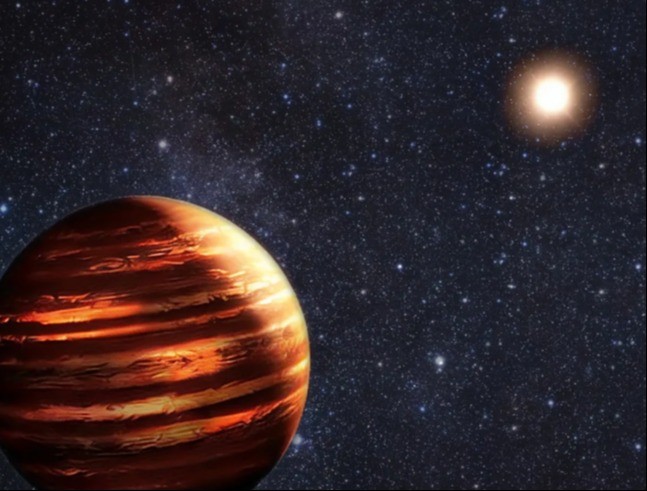
The Boundary Between Planet and Star Formation: The Brown Dwarf Desert
2026-03-04